


For automotive repair, restoration, and reverse-engineering businesses, the challenge is often not finding customer demand. It is completing custom work efficiently enough to make each project commercially worthwhile.
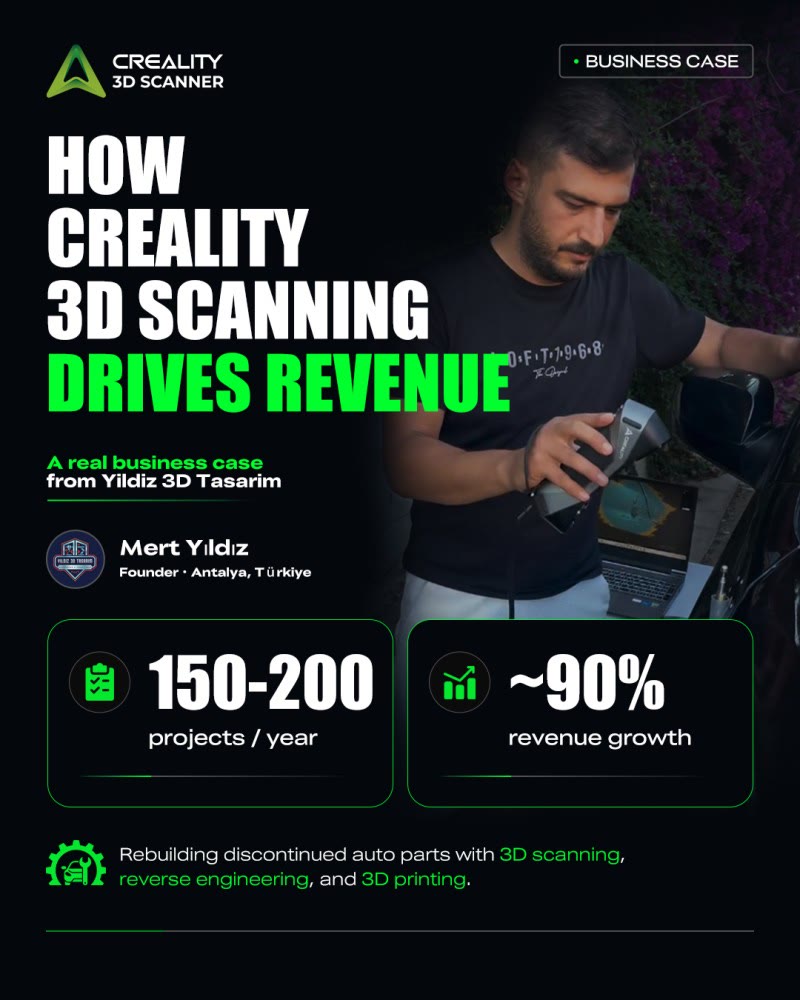
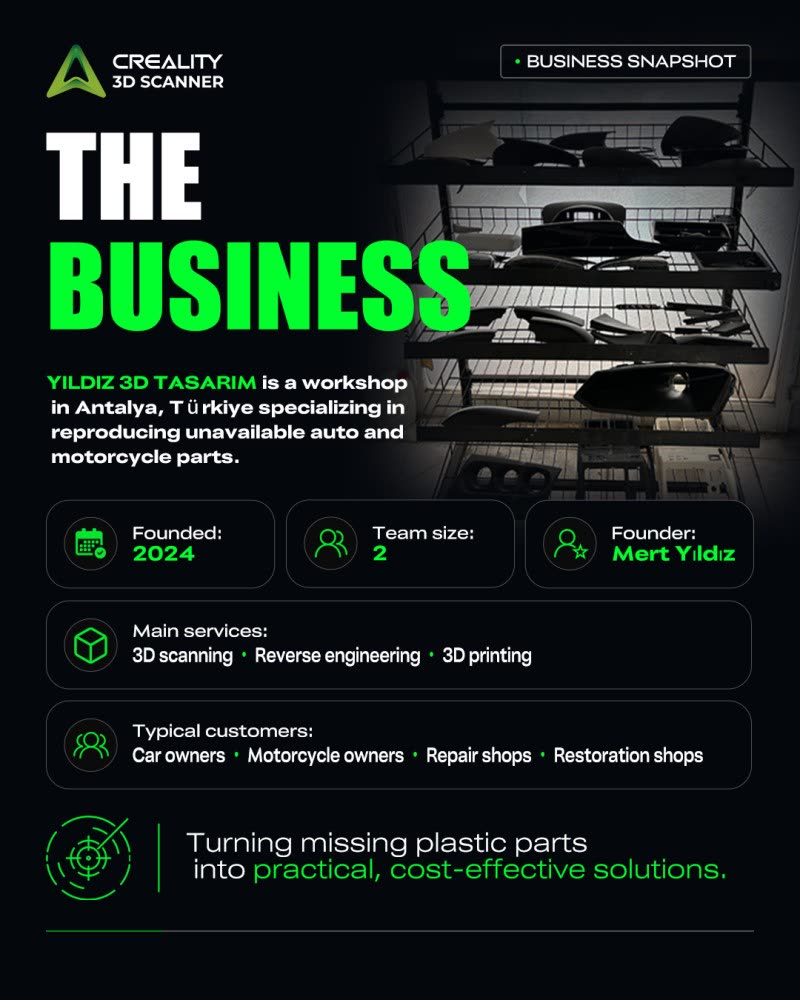
YILDIZ 3D TASARIM, a two-person workshop in Antalya, Türkiye, reproduces discontinued and unavailable automotive and motorcycle parts. Its customers include vehicle owners, repair shops, and restoration businesses that cannot source the parts they need through conventional channels.
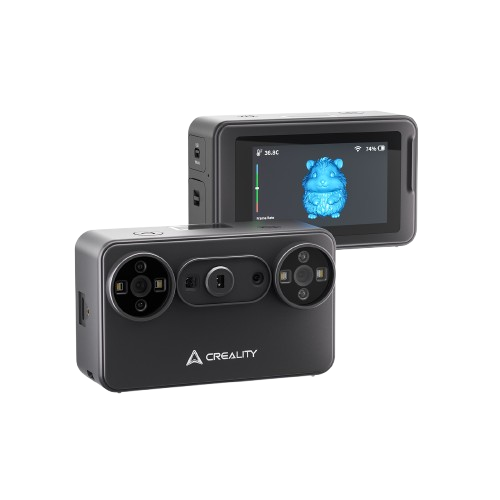
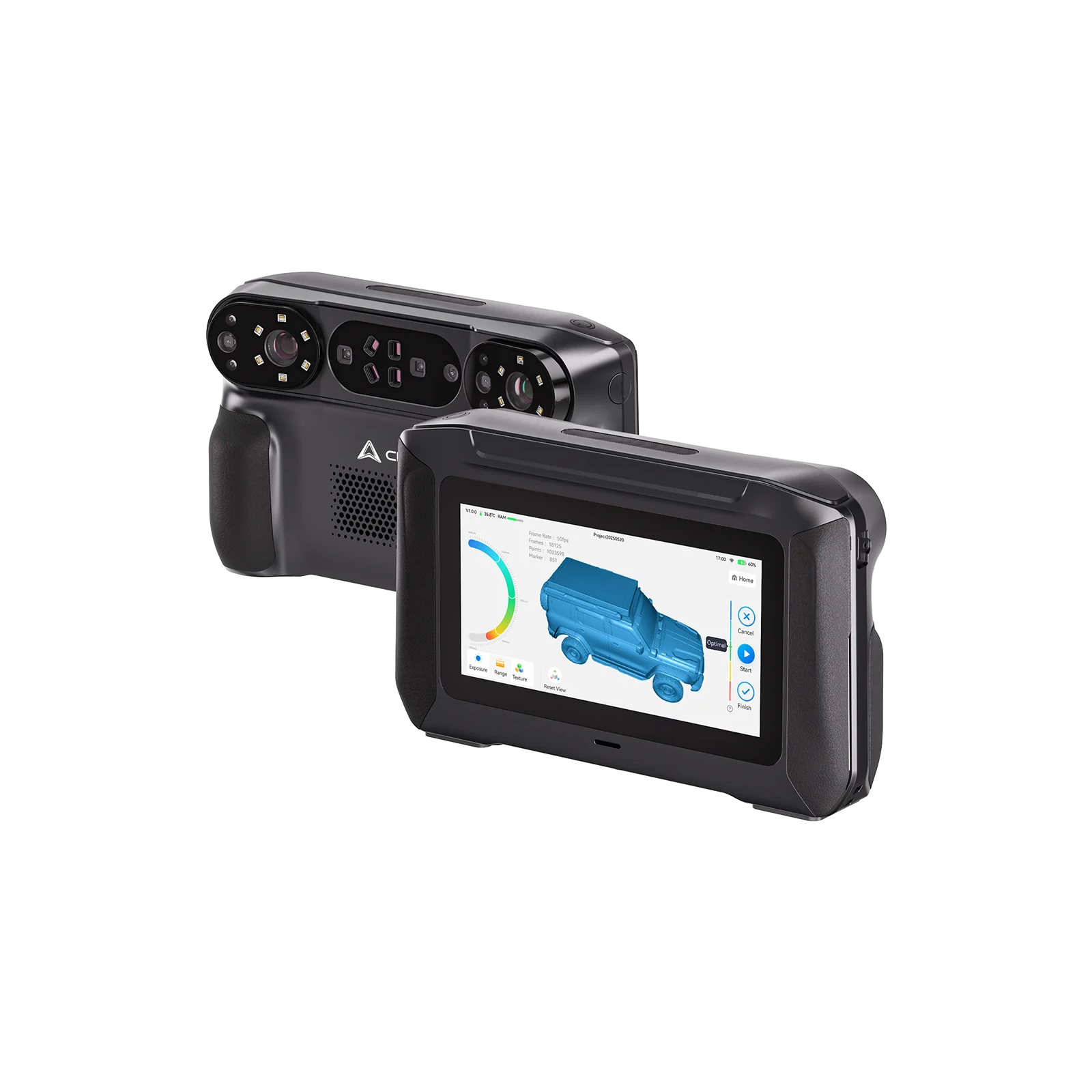
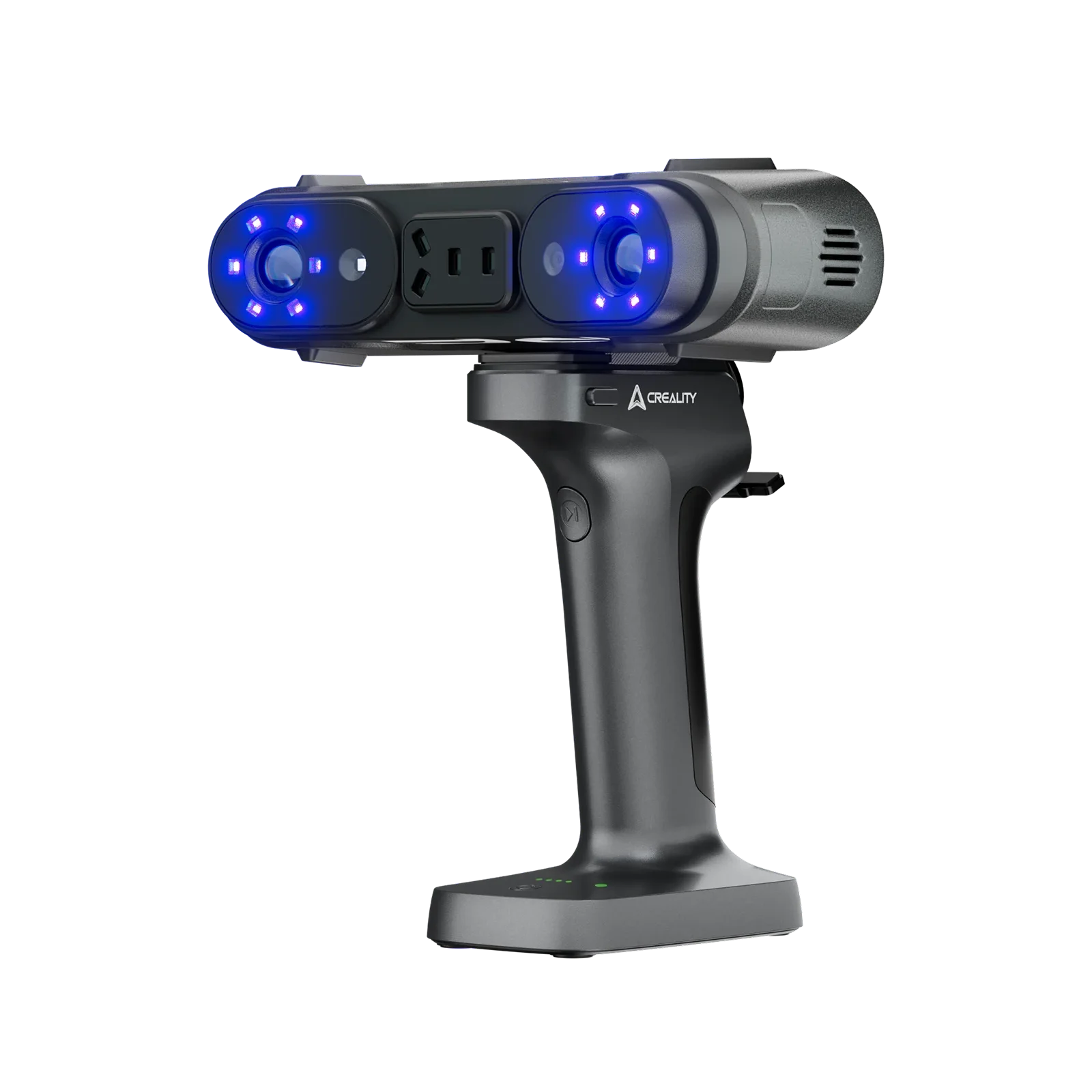
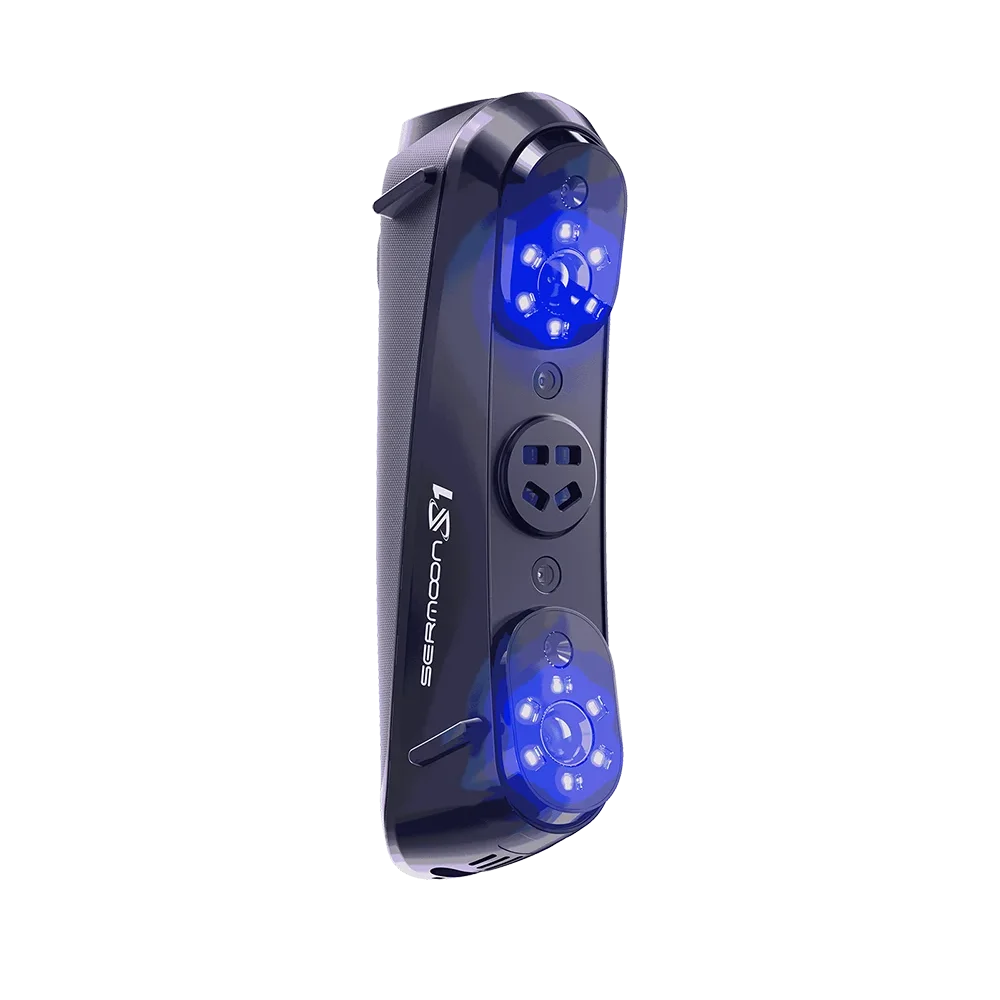
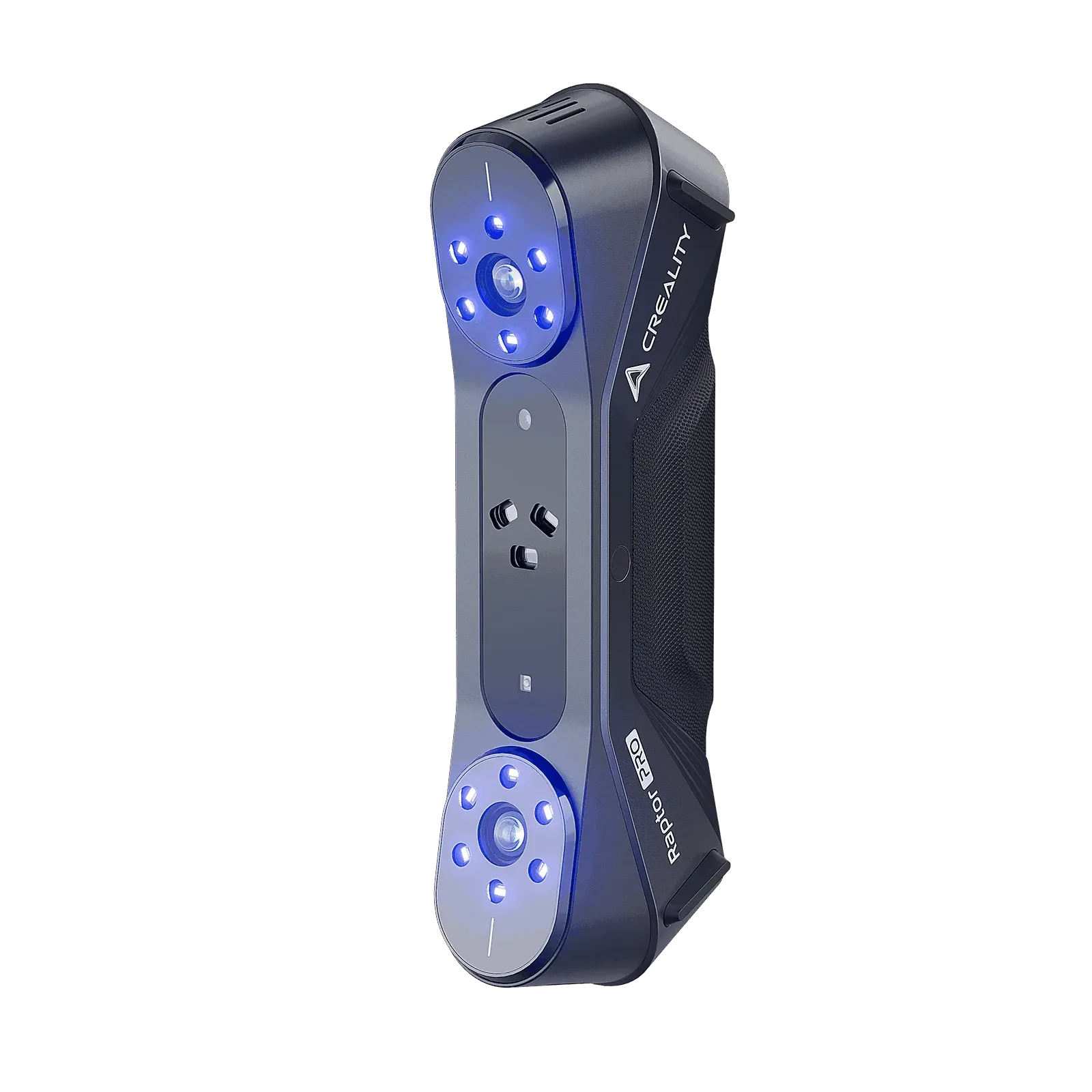
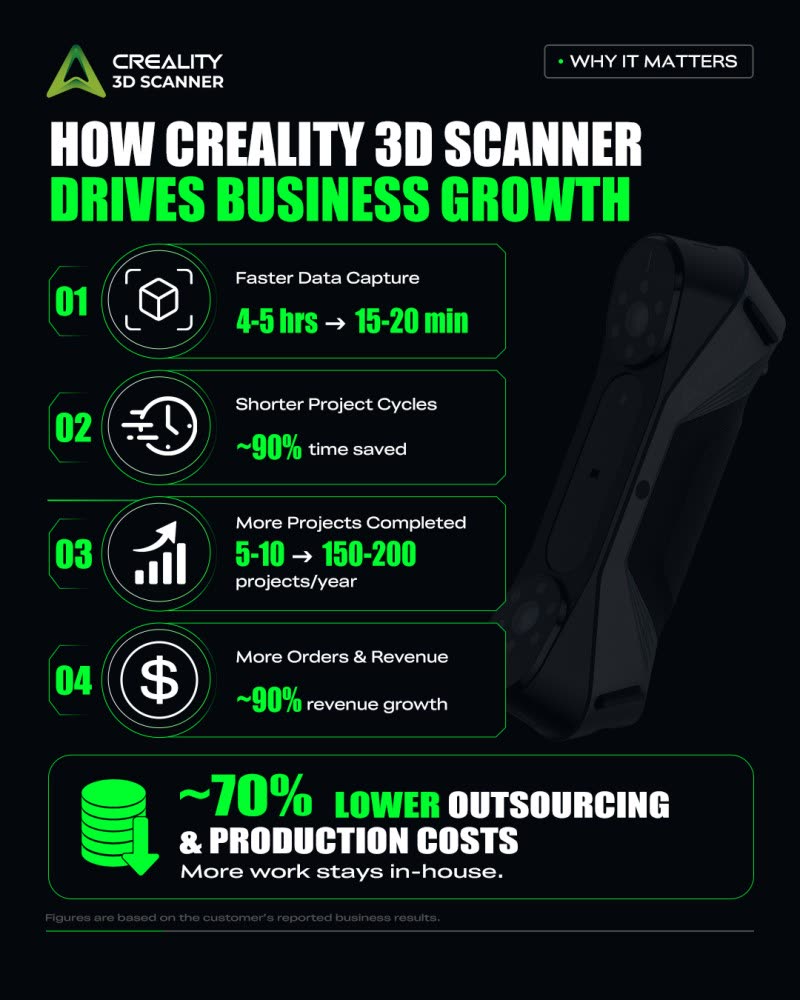
By integrating Creality Raptor into its workflow, the workshop reduced the time required to capture complex part geometry, kept more work in-house, and increased the number of customer projects it could complete.
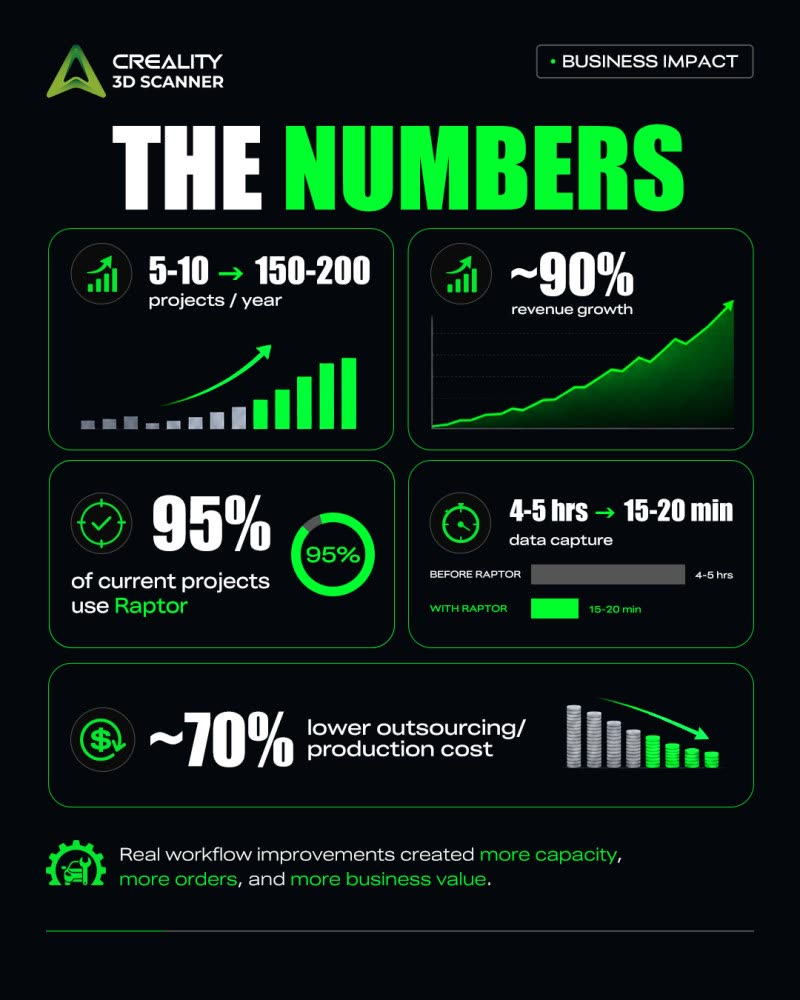
According to the company’s reported results, annual project volume increased from approximately 5–10 projects to 150–200 projects, while revenue grew by around 90%.
The Business Problem: Custom Parts Are Valuable but Time-Consuming
Discontinued automotive parts create a clear market opportunity. A customer may need a tow hook cover, fog lamp trim, air vent frame, mounting bracket, or interior component that is no longer available from the manufacturer. The part may be small, but reproducing it accurately can require substantial work.
Without 3D scanning, a workshop may need to:
-
Take repeated manual measurements
-
Reconstruct complex curves by trial and error
-
Create several prototypes before achieving a proper fit
-
Outsource measurement, modeling, or manufacturing
-
Spend hours preparing data before design work can begin
For low-volume parts, these steps can make the project too slow or too expensive to accept. This was the operational problem Creality Raptor helped YILDIZ 3D TASARIM address.
Faster Data Capture Makes Small Custom Jobs More Viable
Before using Raptor, the workshop reports that manual measurement and modeling preparation could take approximately 4–5 hours. With 3D scanning, the data-capture stage was reduced to around 15–20 minutes. That difference matters because many automotive replacement projects are not large production orders. They are one-off or low-volume jobs with limited margins.
When several hours of manual measurement are removed from the workflow, the business can:
-
Quote smaller jobs more competitively
-
Begin CAD work sooner
-
Reduce the labor cost attached to each project
-
Accept more custom requests
-
Deliver parts faster
For similar workshops, this is one of the most direct ways a scanner can support revenue: it makes jobs commercially practical that may previously have required too much manual work.
Keeping Work In-House Protects Project Margin
YILDIZ 3D TASARIM reports approximately 70% lower outsourcing and production costs after integrating Raptor into its workflow. For small reverse-engineering and manufacturing businesses, outsourcing can reduce profitability in several ways:
-
External service fees increase the cost of each job
-
Data transfer and communication add lead time
-
Quality issues may require additional revisions
-
Small projects may not meet supplier minimums
-
Customer delivery depends on another company’s schedule
By capturing the required geometry internally, the workshop has more control over cost, turnaround time, and data quality. The commercial benefit is not simply spending less. It is retaining a larger share of the value created by each project.
Representative Automotive Projects

Tow Hook Cover
A missing tow hook cover leaves an exposed opening in the bumper, but an original replacement may be unavailable.
The workshop can scan the mounting area, identify the surrounding geometry and connection points, then design and print a replacement that fits the vehicle.
The business value lies in turning a small but difficult-to-source component into a service that can be completed efficiently.
BMW 730 Fog Lamp Trim
Fog lamp trims often contain complex curves and must align closely with the bumper.
Using scanned reference data gives the workshop a more accurate starting point for rebuilding the shape and mounting features. This reduces the number of prototypes required before achieving an acceptable fit.
Mercedes B150 Center Air Vent Frame
Interior automotive parts can be difficult to replace because manufacturers may sell only the complete assembly, or the part may no longer be produced.
By scanning and remodeling the damaged or existing component, the workshop can manufacture only the part the customer needs, creating a more practical and cost-effective repair option.
Where Similar Businesses Can Create Revenue
This workflow is relevant to more than one automotive workshop.
Repair and restoration shops
Reverse-engineering studios
3D printing service providers
Automotive customization businesses
Small manufacturing workshops
Final Thoughts
The strongest outcome is not any single number. It is that a two-person workshop built a repeatable workflow for converting difficult-to-source automotive parts into deliverable customer projects.
Figures are based on the customer’s reported business results.
Follow us for more updates, and submit your outstanding 3D scanning cases for a chance to be featured!