

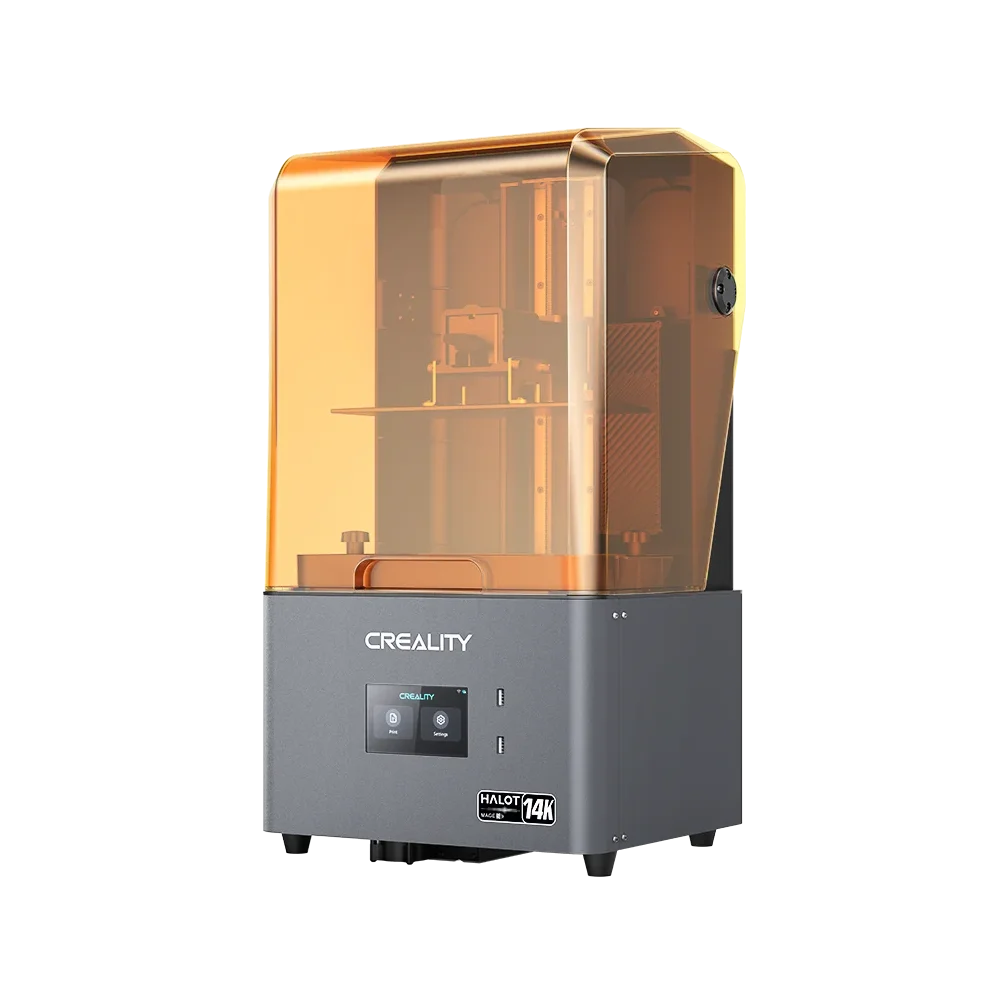
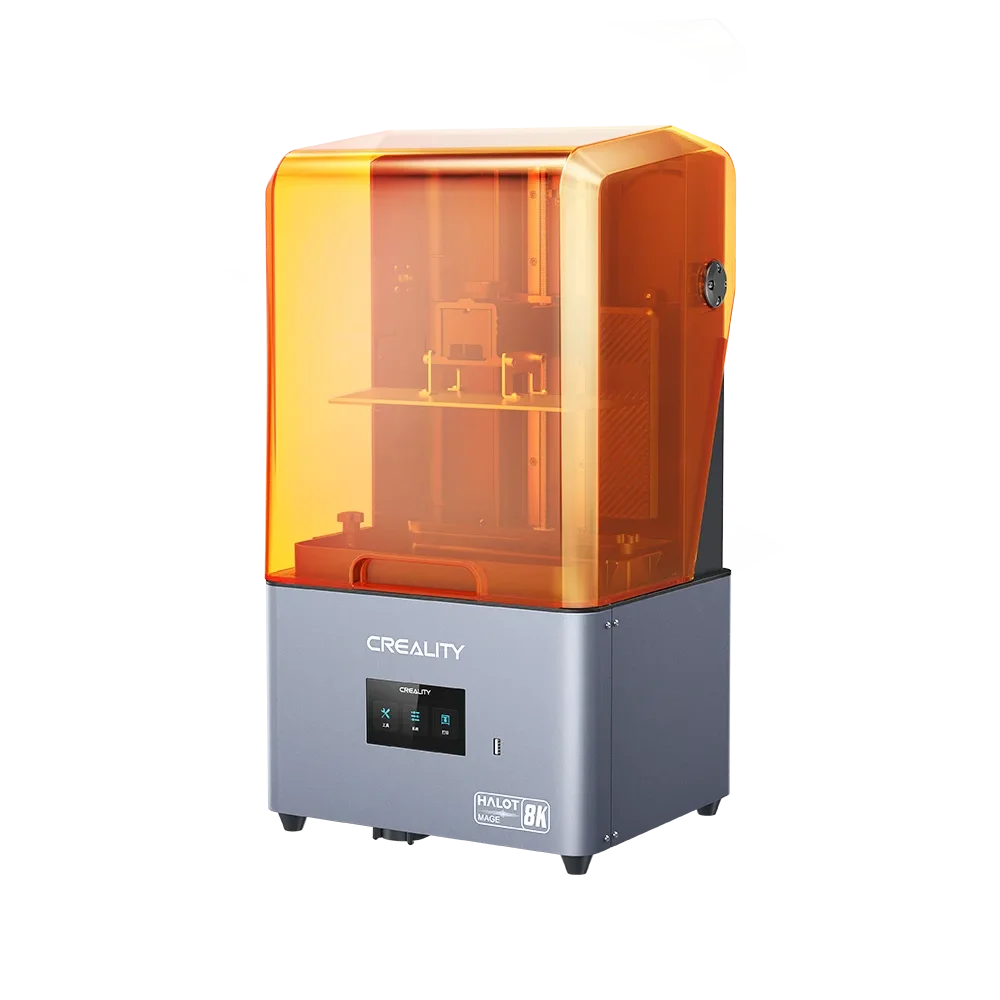
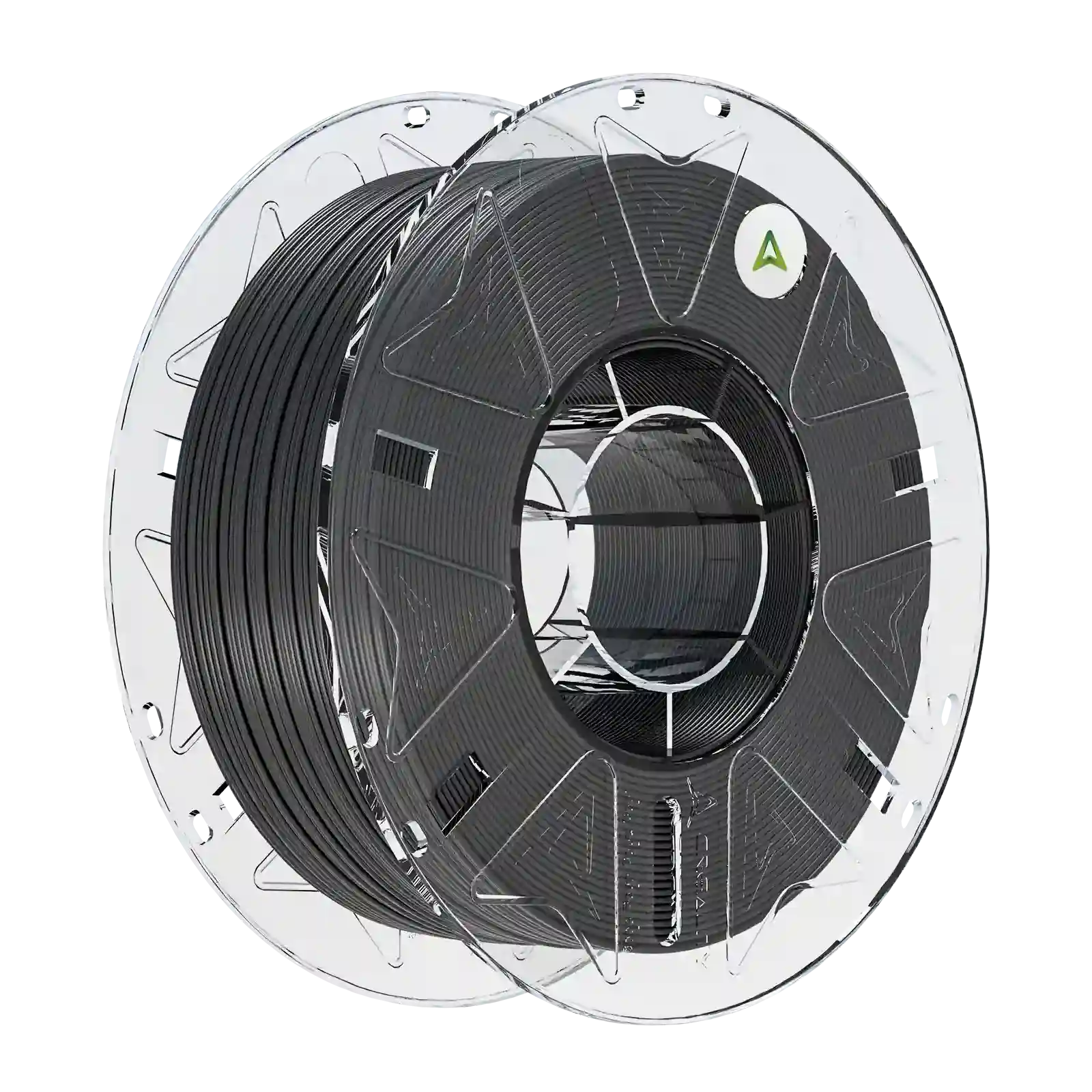
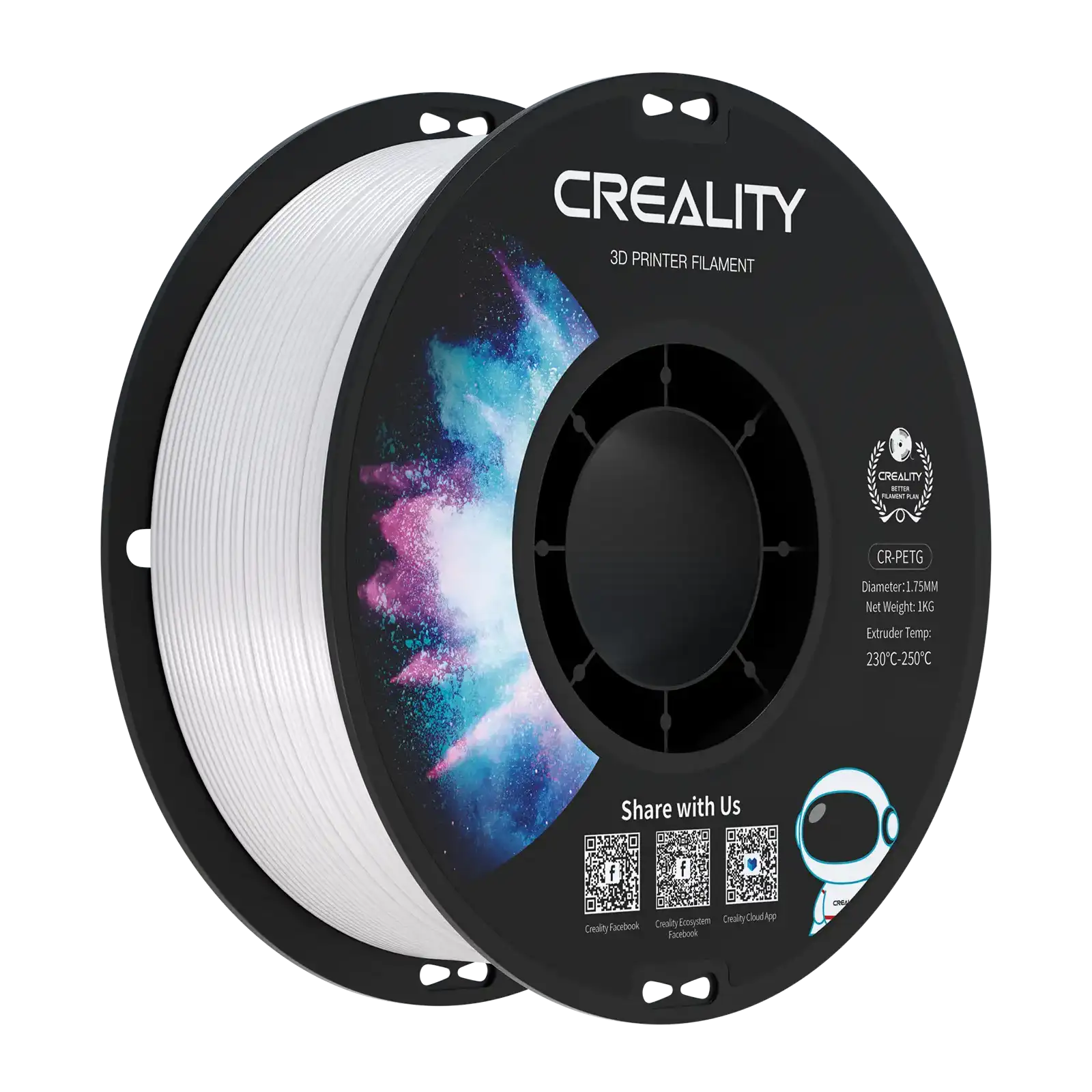



3D printers are no longer just used to create affordable prototypes. The newest 3D printers are capable of creating everything from end-use parts to load-bearing components. Whether you’re a hobbyist or professional 3D designer, your parts may need to withstand heat, stress, and long-term wear. That’s why it’s important to use the strongest 3D print filament possible for your models.
Strength is contextual and will always depend on the specific model you’re creating. If you’re printing a hook or connector piece, you’ll need to use a filament that will provide more tensile strength to prevent the model from being pulled apart. Heat and impact resistance are other types of strength to consider when deciding what the strongest filament will be for your 3D printing.
In this guide, we’re showing you how to choose the strongest filament to suit your current 3D printing project. We’ll be covering FDM filament, engineer-grade materials, and providing practical advice on selecting the best 3D printing filament.
Heavyweights: Top 5 Strongest 3D Printer Filaments
You’ve clicked on this article to find the answer to “What is the strongest 3D printer filament?”, but the answer isn’t entirely straightforward. There are several filaments that could easily take this title and work well with 3D models intended to be used in real-world situations, including car parts.
1. PEEK & PEKK (The Industrial Gold Standard)
PEEK and PEKK are high-performance polymers that are ideal for professional 3D printing. They’re some of the best heat resistant filaments with a heat-resistance over 250°C, while also being chemical resistant and offering optimal mechanical stability. Considered some of the strongest filaments for 3D printing, PEEK and PEKK are typically used for aerospace components and medical implants.
These filaments aren’t compatible with most consumer machines, making they’re not suitable for hobbyist projects, as they require a specialized high-temperature printer. While PEEK and PEKK are the strongest filaments, they’re not the most accessible for 3D printer users.
2. Carbon Fiber Reinforced Nylon (PA-CF / PPA-CF)
PA-CF and PPA-CF filaments have a nylon base, which is reinforced with carbon fiber. Amongst the strongest 3D printing filaments, they have a high stiffness-to-weight ratio and are less flexible than standard nylon, giving them better structural performance.
You’ll typically use these filaments for projects like drone frames and RC parts. They are moisture-sensitive and need a hardened nozzle but are ideal for advanced 3D printer hobbyists and professionals who want to use the strongest filament possible.
3. Polycarbonate (PC)
Polycarbonate is often considered the strongest 3D printer filament as it’s the toughest material that is widely accessible for hobbyists and professionals alike. It has a high tensile strength with optimal impact resistance.
You can use polycarbonate for mechanical components or when creating functional parts. It’s important to take proactive steps to prevent warping and ensure you’re using the right enclosure and temperature settings.
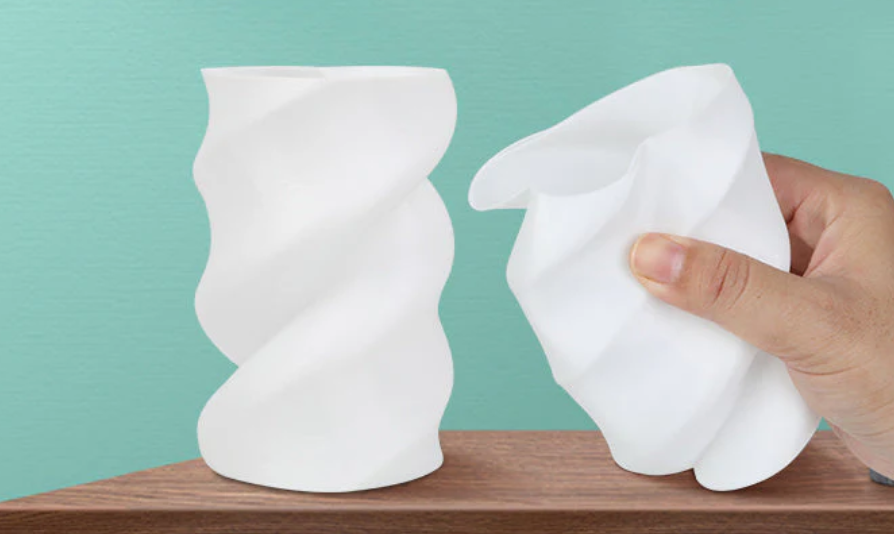
4. TPU (The “Indestructible” Flexible)
Strength can also cause problems with your filament choice, especially if you need some flexibility without compromising on durability. That’s where strong filaments like TPU come in. This 3D printer filament is capable of handling repeated stress and has ideal tear resistance for projects like seals and gaskets, where you still need a little flexibility.
5. Tough PLA / PETG (The Consumer Workhorse)
If you’re a 3D printer hobbyist, you’ll want a filament that is accessible and can deliver consistently reliable results. PLA and PETG are ideal candidates for “What is the strongest filament for 3D printing?”, when considering the question from the point of view of everyday consumers. They offer moderate tensile strength, and PETG provides great layer adhesion for everyday functional parts and durable prototypes.
FDM vs. SLA: Which Technology is Truly Stronger?
It’s a common myth that FDM prints are always stronger than resin prints (SLA). In reality, modern resins have developed rapidly in recent years, and their strength now rivals popular FDMs like ABS and even nylon. However, it’s important to remember that these materials are better suited for some 3D projects more than others.
The strength of FDM prints will depend on their print orientation, although they’re usually weakest along the Z-axis as they have a layer-based structure. By comparison, the strength in SLA (resin) prints is more consistent as it is isotropic.
When deciding “What is the strongest 3D printer filament?”, it’s important to also consider the printing process and geometry. FDM is suitable for high-temperature materials and creating larger structural parts, while you’ll want to switch out for SLA when printing parts that will be used in high-stress environments.
Direct Comparison Table (2026 Updated)
|
Material
|
Tensile Strength
|
Impact Resistance
|
Heat Resistance
|
Difficulty
|
|
PEEK
|
Ultra-High
|
High
|
Ultra-High
|
Expert
|
|
PA-CF
|
High
|
Medium-High
|
High
|
Advanced
|
|
PC
|
High
|
Ultra-High
|
High
|
Advanced
|
|
PETG
|
Medium
|
Medium
|
Medium
|
Easy
|
|
Tough Resin
|
High
|
High
|
Medium
|
Medium
|
Although this comparison table is a great point of reference, it’s important to remember that the real-world strength of a filament will always vary. Your 3D printer settings, printing orientation, and processing will also contribute to its overall strength.
Selection Guide: Which 3D Filament Should You Choose?
The best filament for your 3D model may not be the one that’s strongest on paper. Here are 4 common use cases and the strongest 3D printer filament for each:
-
Structural jigs and fixtures: Carbon fiber nylon works best as a strong, lightweight filament that is stiff.
-
High-temperature environments: PEEK and PEKK are polycarbonates and the most accessible filaments for models that need to withstand high temperatures.
-
Functional prototypes: PETG, ABS, and tough resin are all suitable for stronger prototypes.
-
Outdoor/UV exposure: UV-resistant resins and ASA are necessary when you’re printing 3D models that are intended to be used outside or in direct sunlight.
Pro Tips for Maximizing Part Strength
Choosing the right filament is only one part of the 3D printing process. Everything from your design choices to the wall thickness and your printer settings will determine how strong your 3D model is.
In most cases, orientation matters more than the material you use, so it’s important to be practical in your design choices. It’s best to avoid stress concentration points and to use fillets instead of sharp corners. Thicker walls will make functional parts stronger, and a gyroid infill can balance the strength in your model. Post-processing is also important, and annealing can help improve the strength of PLA and nylon, while resin curing is a must-do for mechanical parts.
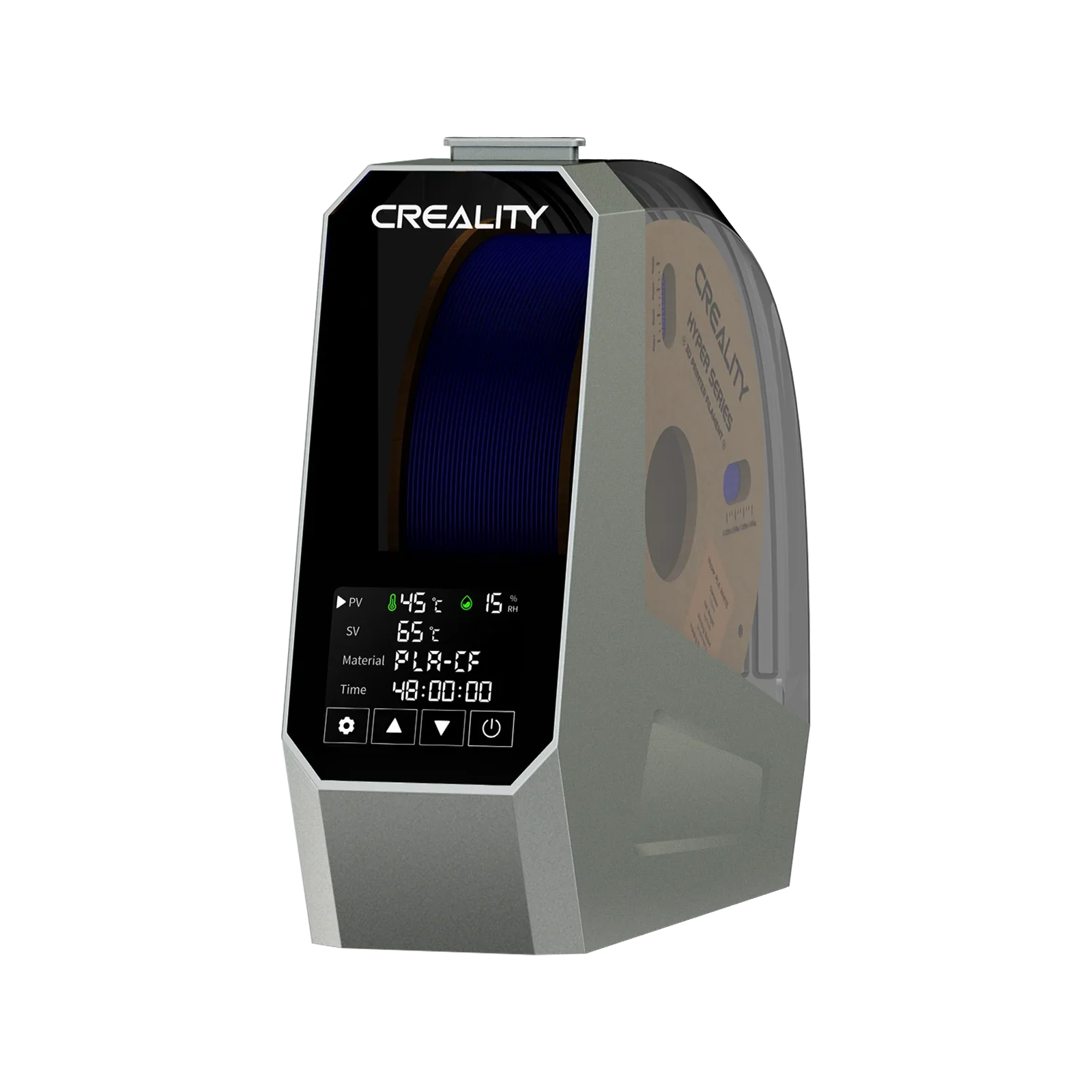
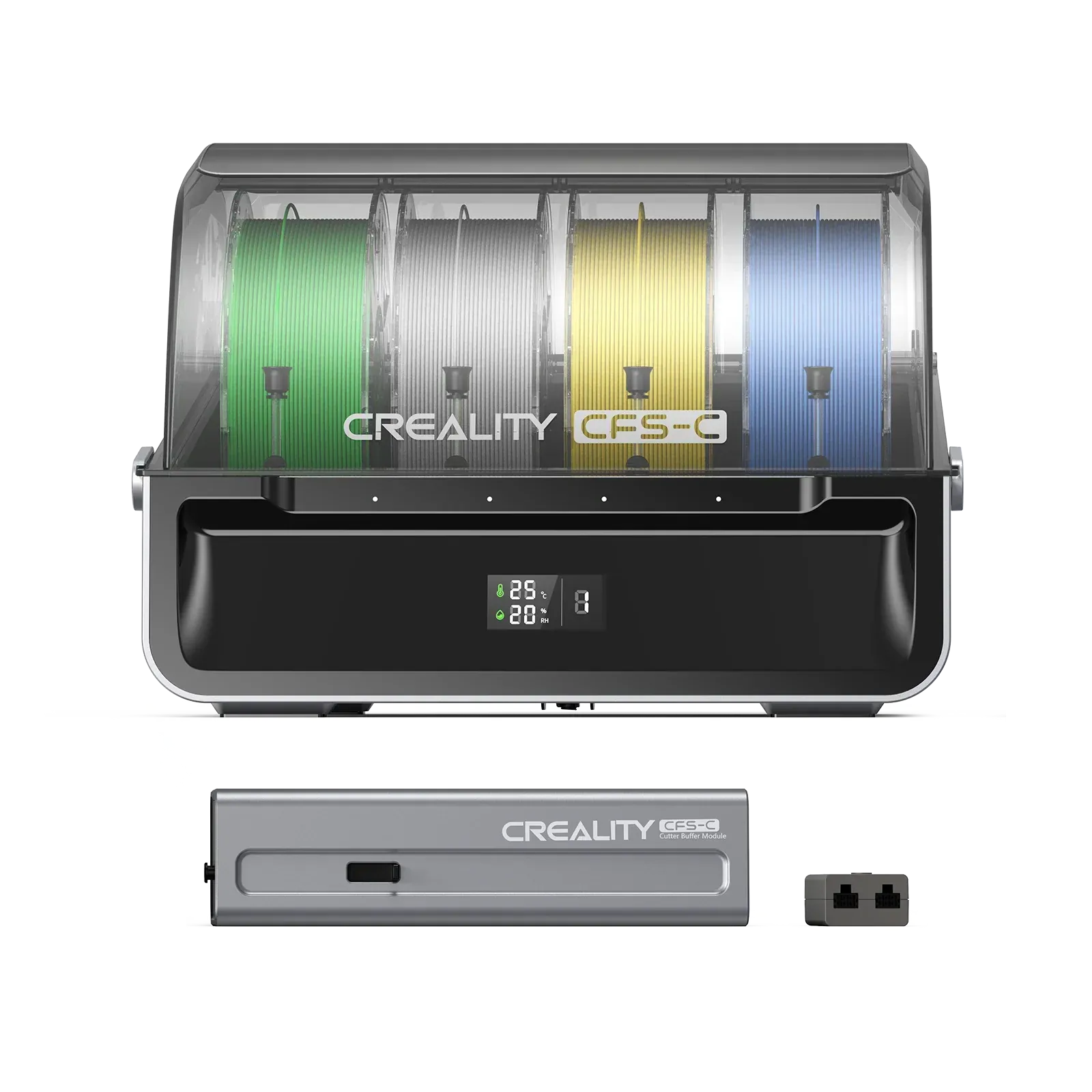
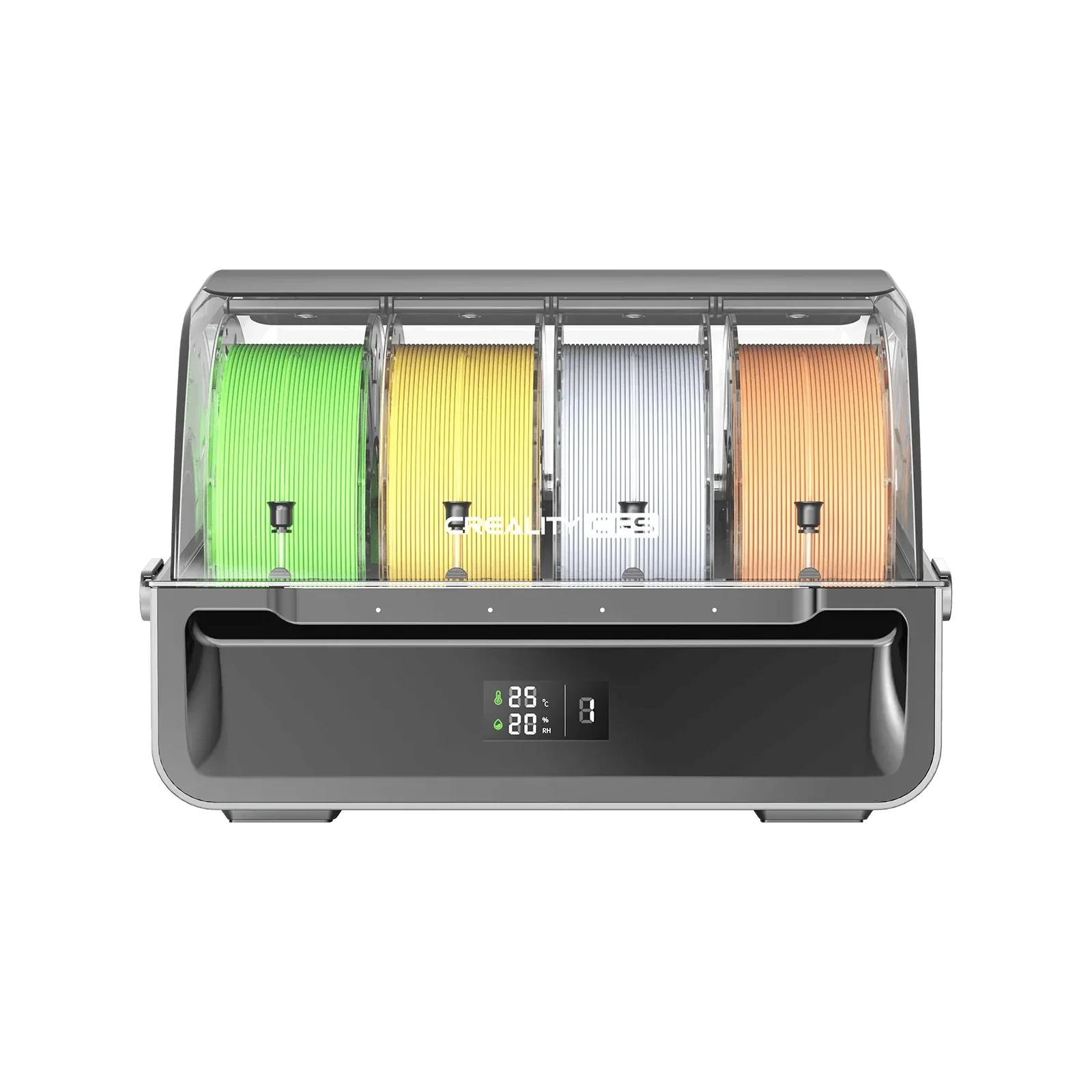
Every material is different, and understanding its properties will make it easier to avoid common mistakes. Moisture control is crucial when using materials like nylon, PETG, and TPU, as they absorb moisture, so you’ll want to avoid wet filaments. Dry filaments will give you better tensile strength and layer adhesion.
Your printer settings can also impact the strength of your 3D models. Using a slightly higher temperature setting will improve the bonding, while slower speeds can also improve layer fusion for better consistency. Speed isn’t everything, and working slower is often the compromise you’ll need to make for stronger 3D models.
Discover The Future of High-Strength 3D Printing with Creality
3D printing is evolving on what feels like a daily basis, with even hobbyists using engineering-grade materials and composite filaments to create functional parts. Using a strong filament is crucial to ensuring the integrity of your model, but there’s no material that is outright considered to be the “strongest filament”.
The strength of your model will always depend on the material, design orientation, and printer settings that you use. Always make sure to optimize your printer settings and choose the right material for each project. Start your 3D printing journey with a Creality printer or explore Creality Cloud to get ideas for your next 3D model.