

For many small studios, independent builders, and professional creators, the challenge is not a lack of ideas, but turning complex concepts into accurate, buildable results.
This is especially true in automotive customization, reverse engineering, 3D printing, and product design, where parts are often non-standard and drawings are unavailable. Traditional methods such as manual measurements, templates, hand-shaped forms, and repeated test fitting can work, but they are time-consuming, difficult to document, and often involve trial and error.
For Mathias, the creator behind the Corsa GSTi project, 3D scanning has become a key part of solving these challenges.
Corsa GSTi is his personal racecar project website, where he documents the development of a custom-built, one-off racecar. Over more than 17 years, the car has gone through numerous mechanical and bodywork iterations, many of which were originally built using traditional fabrication methods.
Around 2023, after learning 3D modeling, Mathias began using 3D printing for smaller custom parts such as fittings, mounts, and functional components. As the project became more complex and parts needed to fit into tighter, more specific spaces, he realized that manual measurement alone was no longer enough.
That was when 3D scanning became an essential part of his workflow.
A Crash That Changed the Project
In late 2024, Mathias crashed his car on the racetrack. A significant amount of the work he had built over the years was damaged, and restoring the car to its previous state became a major challenge.
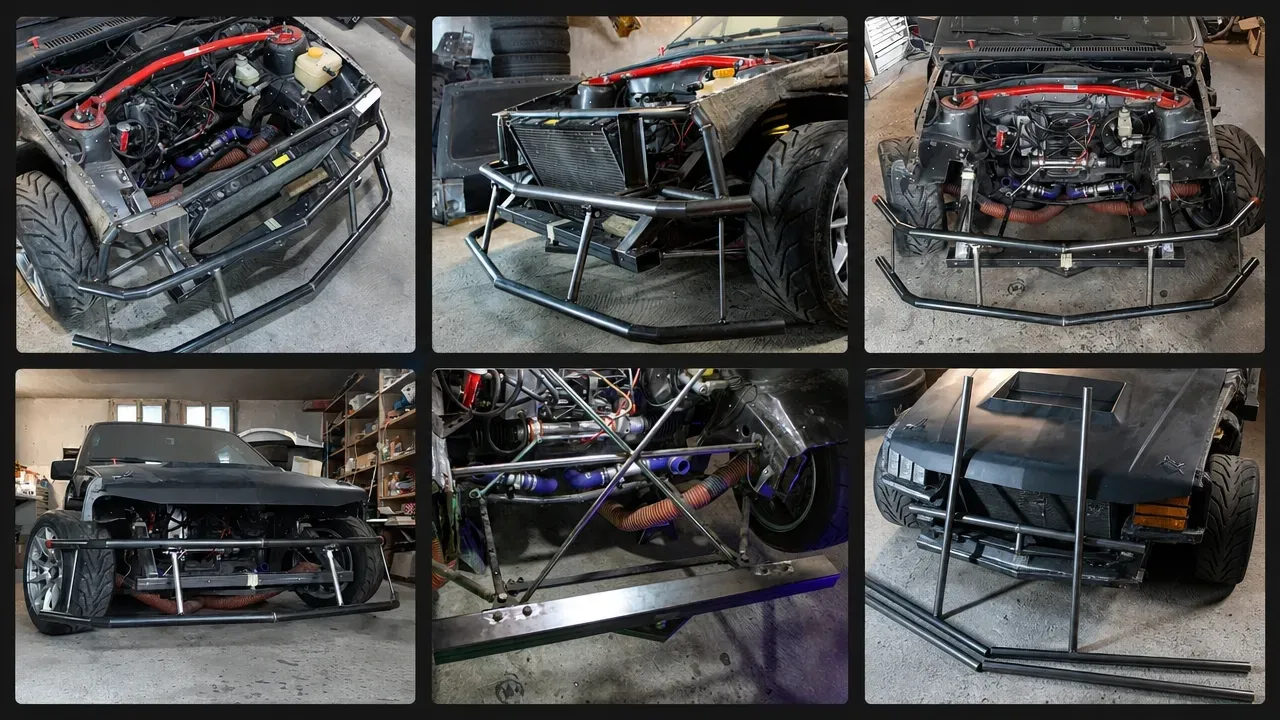
Because the vehicle had been heavily modified over 17 years, many of its components no longer matched original factory specifications. There were no complete digital drawings to rely on, and traditional repair methods would have required extensive manual measuring, estimating, and repeated adjustments.
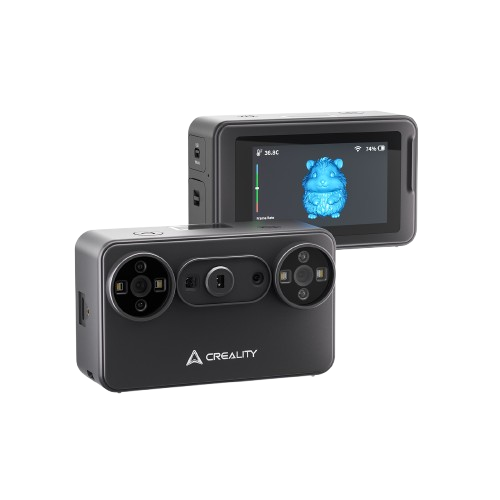
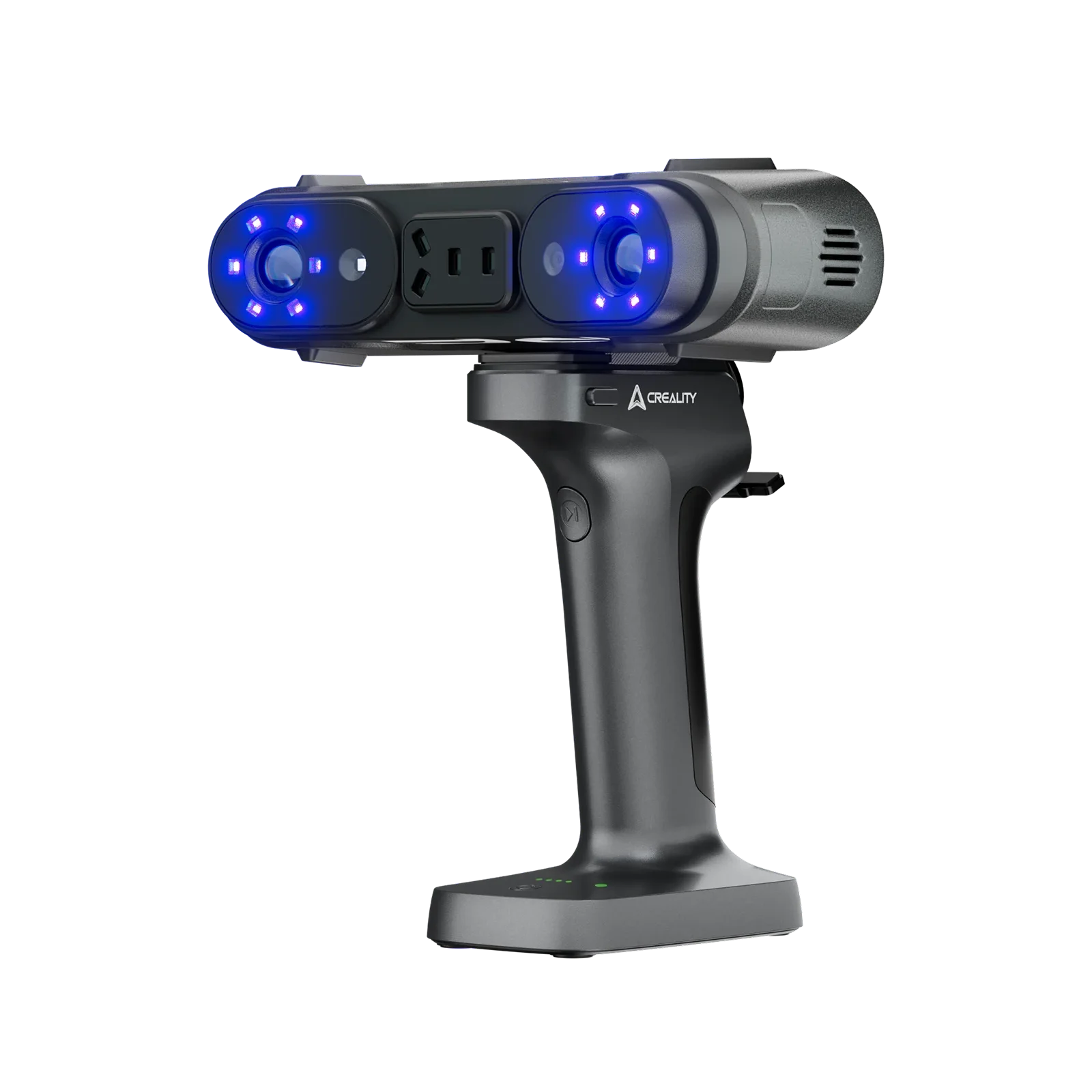
Using the Creality Ferret at the time, Mathias scanned key remaining parts of the car, including the bumpers, side skirts, arches, and the front section of the chassis. These scans provided a digital foundation for planning the rebuild in CAD.
The scan data allowed him to design a new section of the chassis, digitally recreate the body kit, and move toward making the entire bodywork 3D printable.
What started as a way to recover damaged parts quickly became a much broader digital reconstruction workflow.
Moving From Estimation to Data-Driven Engineering
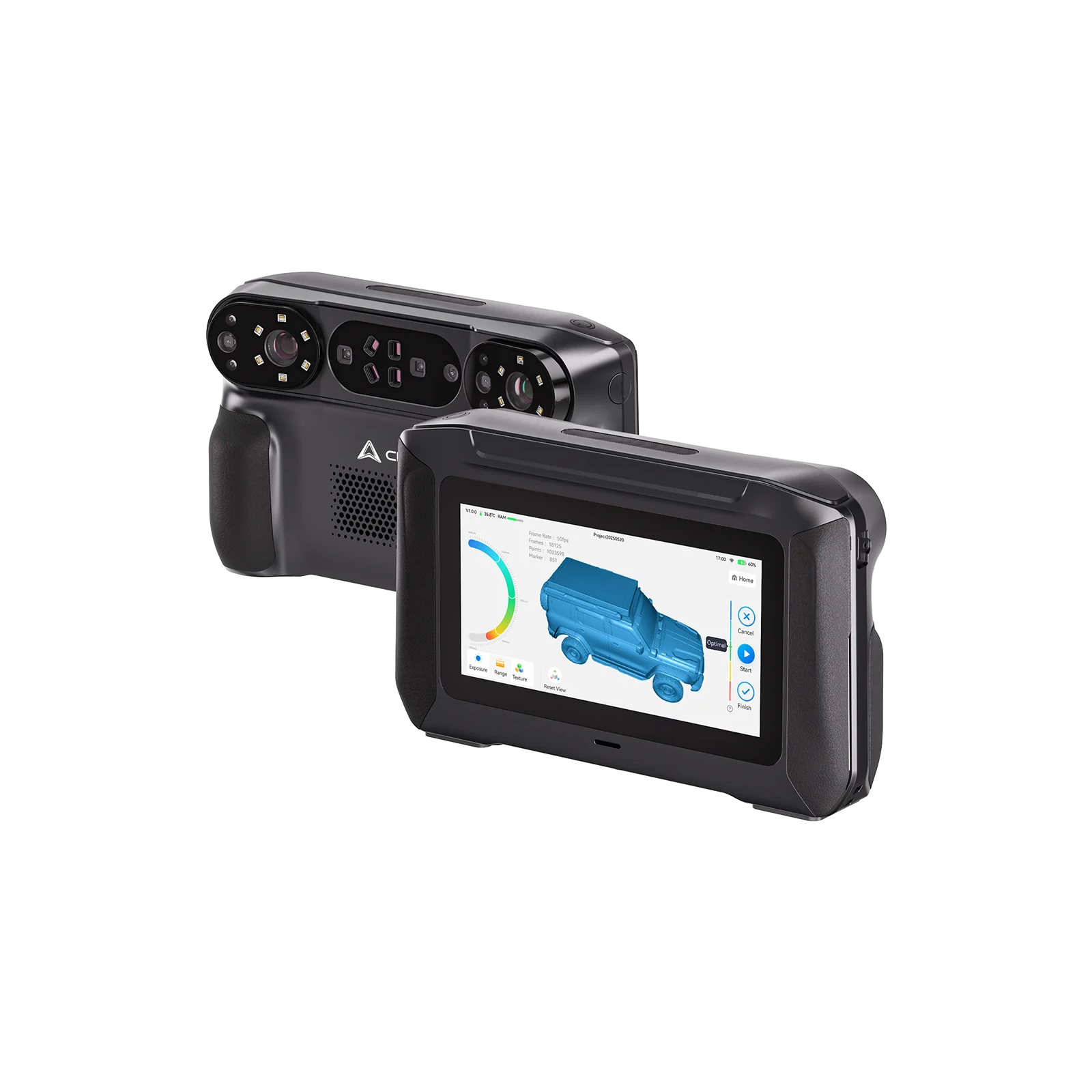
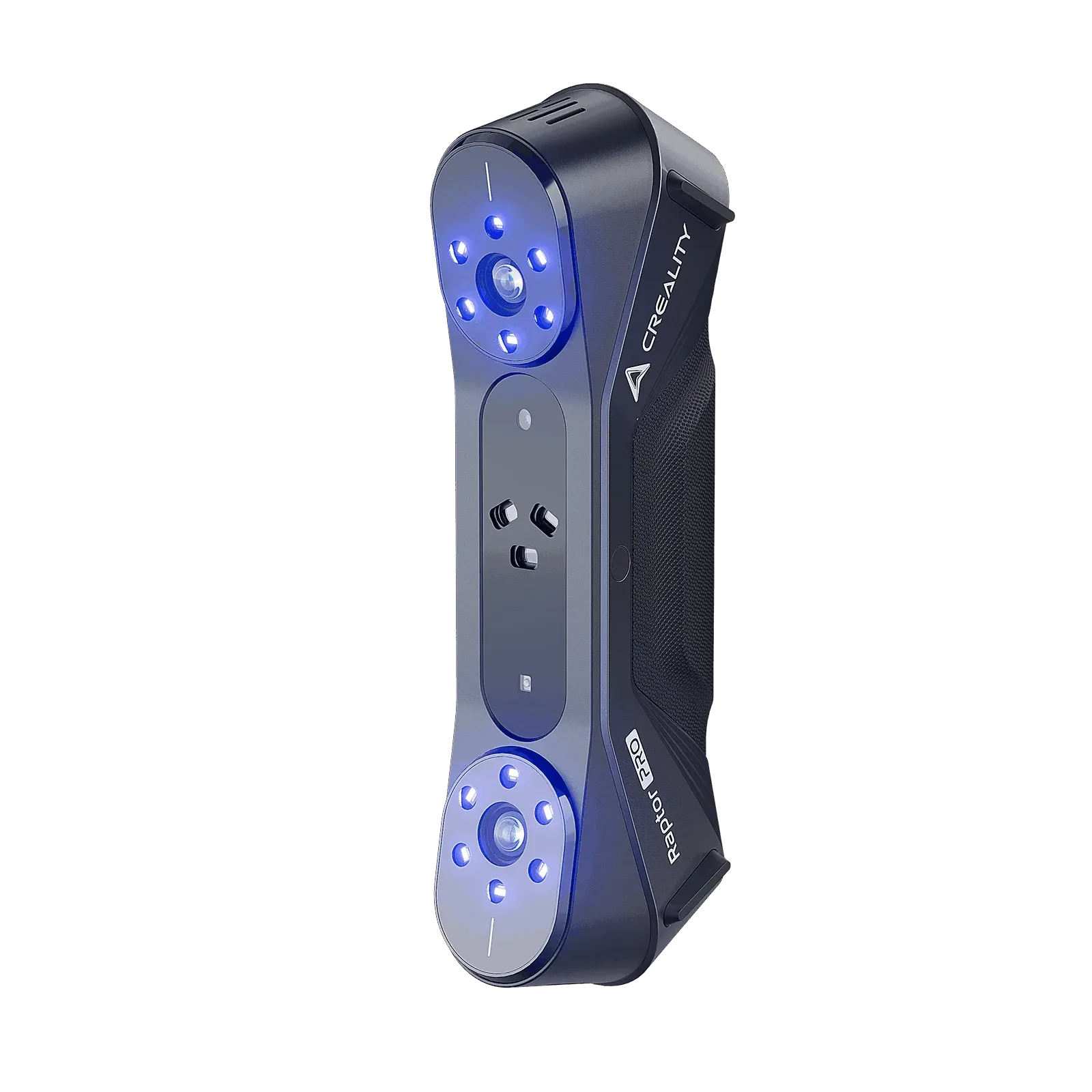
After Creality provided Mathias with the Raptor Pro, he was able to take the project to a higher level of precision and capability.
The new scanner enabled him to accurately digitize the car and create a reliable base for future development. One of the most valuable applications during the rebuild was suspension geometry analysis.
Over more than 17 years of development, the chassis and suspension had undergone many modifications. As a result, it became difficult to accurately document the current state of the vehicle using traditional measuring methods alone. The car had also shown some undesirable behavior on the racetrack, and Mathias wanted to understand the root cause instead of continuing to make changes through trial and error.
By scanning the chassis, suspension mounting points, and surrounding structures, he created an accurate digital representation of the vehicle. This data was then used to build a detailed suspension model for kinematic analysis.
The process helped identify areas where the geometry could be improved and allowed Mathias to make design decisions based on measured data rather than assumptions.
After implementing the changes, he used 3D scanning again to verify that the fabricated components and mounting locations matched the intended design. This ability to both analyze and validate modifications within the same digital workflow significantly increased confidence in the final result while reducing development time.
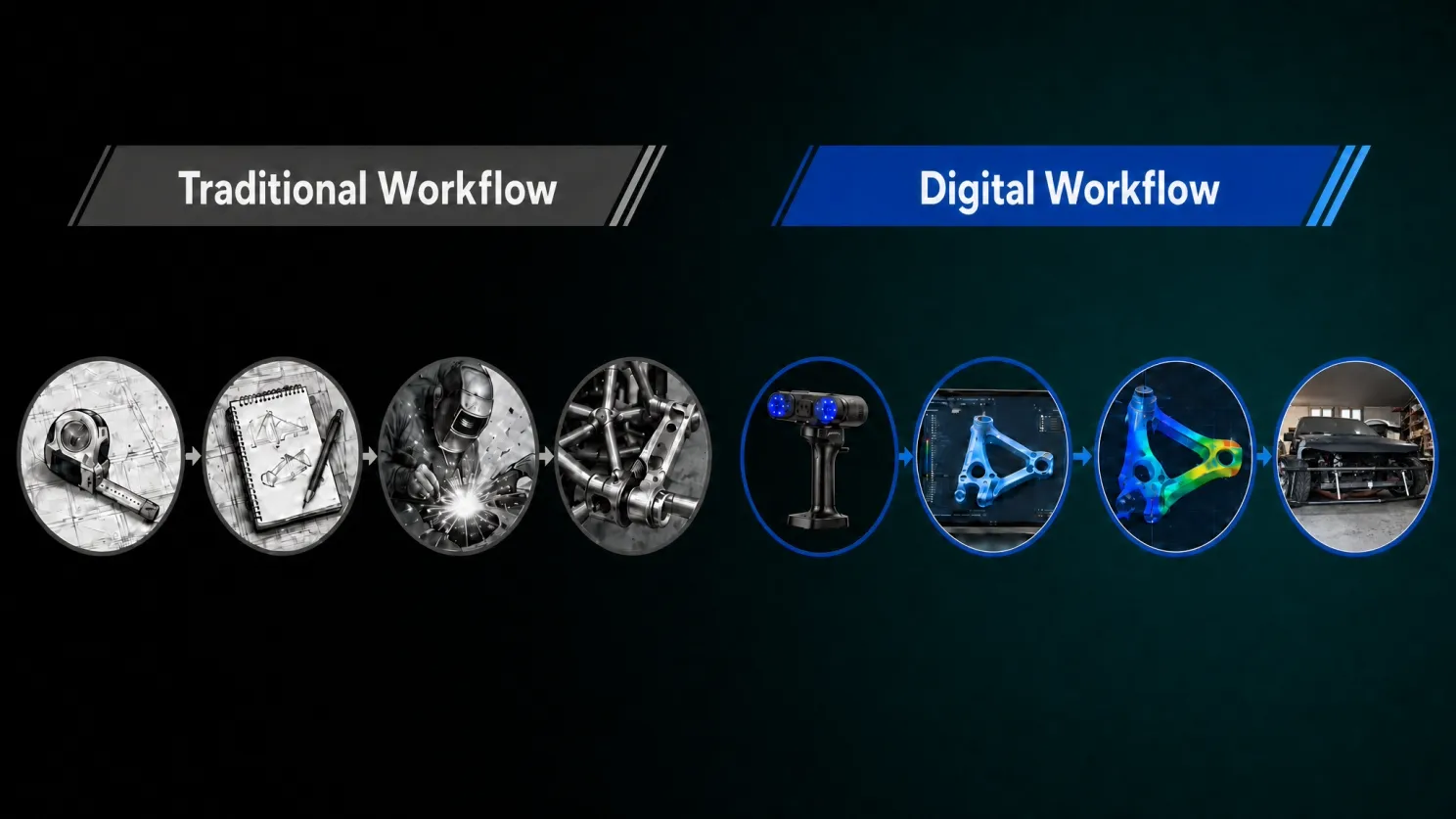
For Mathias, 3D scanning transformed the process from:
measure → estimate → fabricate → test fit
into a more mature workflow:
scan → design → validate digitally → manufacture
This shift is one of the clearest examples of the practical value 3D scanning can bring to independent builders, small automotive projects, and professional creative workflows. It does not simply improve accuracy. It reduces uncertainty, minimizes repeated manual checks, and allows more time to be spent on engineering decisions and final project quality.
Turning a Physical Project Into a Digital Asset
Beyond repair and fabrication, 3D scanning also enabled Mathias to recreate the entire racecar as a 3D model.
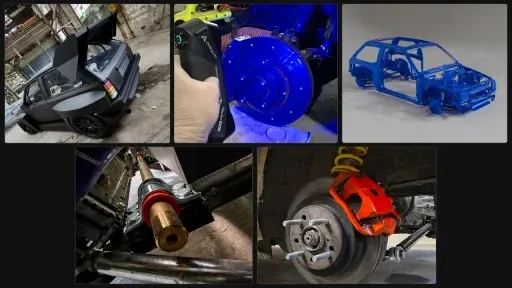
This digital model supports engineering development and opens up new creative possibilities, including use in racing simulation, where driving physics can be fine-tuned based on real-world data.
It also allows Mathias to document the complete process, from scan data and CAD design to finished parts and virtual assets, rather than only showing the final result.
For independent builders and small professional projects, this has real practical value. A clear digital workflow makes technical capability easier to demonstrate, helping audiences, potential clients, and partners understand not only what was built, but how it was developed.
This strengthens the project’s credibility, visibility, and influence while keeping it positioned as Mathias’ personal project rather than a formal commercial business.
A Core Tool for Professional Creative Workflows
Today, 3D scanning has become a central part of Mathias’ racecar development process, providing the digital foundation for rebuilding crash damage, redesigning suspension geometry, creating 3D printable bodywork, and building a complete digital vehicle model. His story shows how 3D scanning helps independent creators and small professional teams reduce trial and error, improve accuracy, take on more complex projects, and turn their expertise into a clear, credible, and shareable workflow.
We are currently looking for industry experts and professional users who are interested in 3D scanning. Creality will provide dedicated resources and support for this program. If you are interested, feel free to send us a message.